Top 15 Oracle Patching Challenges DBAs Face (And How Automation Can Help)
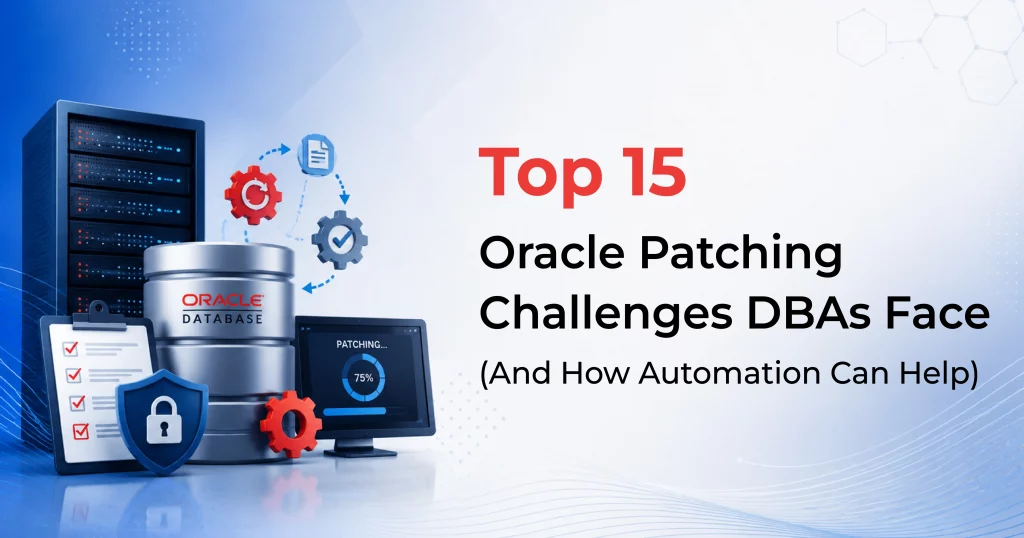
Table of Contents
Oracle database patching is one of the most critical responsibilities for Database Administrators (DBAs). Regular patching helps organizations maintain database security, improve performance, ensure compliance, and reduce operational risks. However, Oracle patching is rarely simple — especially in large enterprise environments with complex infrastructures.
From downtime concerns to compatibility issues and failed rollbacks, DBAs face numerous challenges during patch implementation.
In this article, we’ll explore the Top 15 Oracle patching challenges DBAs face and how automation solutions like Clonetab CT-Patch can simplify Oracle patch management.
Why Oracle Database Patching Matters
Oracle regularly releases:
- Critical Patch Updates (CPUs)
- Release Updates (RUs)
- Security fixes
- Bug fixes
- Performance enhancements
Failing to apply these updates can expose organizations to:
- Security vulnerabilities
- Compliance violations
- Database instability
- Performance degradation
- Increased downtime risks
Despite its importance, Oracle patching remains a highly complex operational task for many DBA teams.
Top 15 Oracle Database Patching Challenges DBAs Face
1. Downtime Management
One of the biggest challenges is minimizing downtime during patch implementation. Many production databases support mission-critical applications that cannot tolerate long outages.
Common issue: Coordinating maintenance windows across global business operations.
Best practice: Use Oracle RAC, Data Guard, or rolling patching strategies to reduce downtime.
2. Patch Compatibility Issues
Not every Oracle patch works seamlessly with existing environments. Conflicts may occur with:
- Operating systems
- Third-party applications
- Database versions
- Middleware components
Compatibility testing is essential before deploying patches in production.
3. Complex Dependency Management
Oracle environments often include interconnected systems such as ASM, Grid Infrastructure, WebLogic, and Exadata.
Patching one component without considering dependencies can break the entire ecosystem.
Challenge: Identifying patch sequencing requirements.
4. Inadequate Testing Environments
Many organizations lack staging environments identical to production systems.
Without realistic testing:
- Bugs go unnoticed
- Performance issues emerge later
- Rollbacks become difficult
A proper pre-production testing environment significantly reduces risk.
5. Rolling Back Failed Patches
Patch failures can leave databases in unstable states. Rollbacks are not always simple and may require:
- Database recovery
- Backup restoration
- Manual troubleshooting
Incomplete rollback procedures can increase downtime.
6. Security Compliance Pressure
Organizations must comply with standards like:
- PCI DSS
- HIPAA
- GDPR
- ISO 27001
Delayed Oracle security patching can result in compliance violations and audit failures.
7. Lack of Skilled Resources
Oracle patching requires specialized expertise in:
- OPatch utilities
- RAC patching
- Data Guard configurations
- Grid Infrastructure maintenance
Smaller IT teams may struggle to manage complex patching cycles efficiently.
8. Patch Documentation Complexity
Oracle documentation can be extensive and difficult to interpret, especially for cumulative patches and bundle updates.
DBAs often spend hours reviewing:
- Readme files
- MOS notes
- Prerequisite checks
- Conflict resolution steps
9. Managing Multi-Database Environments
Large enterprises may manage hundreds of Oracle databases across multiple locations.
Tracking patch levels manually becomes inefficient and error-prone.
Challenge: Maintaining patch consistency across environments.
10. Performance Degradation After Patching
Some patches may unintentionally affect:
- Query performance
- Execution plans
- Memory utilization
- Application response times
Post-patch performance validation is critical.
11. Coordination Between Teams
Oracle patching often requires collaboration between:
- DBAs
- System administrators
- Application owners
- Security teams
- Change management teams
Poor communication can delay patch deployment and increase operational risk.
12. Frequent Critical Patch Updates (CPUs)
Oracle releases quarterly CPUs and Release Updates regularly. Keeping up with patch cycles becomes challenging for busy DBA teams.
Common concern: Patch fatigue and scheduling overload.
13. Backup and Recovery Risks
Before patching, reliable backups are mandatory. However, backup failures or incomplete recovery validation can create major risks.
DBAs must ensure:
- RMAN backups are valid
- Restore procedures are tested
- Recovery time objectives are achievable
14. Handling Legacy Oracle Systems
Older Oracle database versions may no longer receive regular support or patches.
Legacy environments introduce challenges such as:
- Unsupported operating systems
- Deprecated features
- Limited patch availability
These systems become vulnerable to security threats.
15. Automation Challenges
While Oracle patching automation reduces manual effort, implementing automation itself can be challenging due to:
- Environment complexity
- Hybrid infrastructure
- Custom workflows
- Compliance controls
However, organizations increasingly rely on automation platforms to modernize Oracle patch management.
How Oracle Patching Automation Helps
Automation significantly improves Oracle patching efficiency by reducing manual tasks, minimizing errors, and standardizing deployment processes.
Benefits of Oracle patch automation include:
- Faster patch deployment
- Reduced downtime
- Improved compliance
- Standardized workflows
- Better patch consistency
- Lower operational risk
One emerging solution in this space is Clonetab CT-Patch.
Recommended Oracle Patching Automation Tool: Clonetab CT-Patch
Clonetab CT-Patch is an Oracle Home fleet patching automation solution designed for enterprise Oracle environments.
The platform helps automate Oracle patching workflows across:
- Oracle Databases
- Oracle RAC
- Oracle EBS
- Oracle Homes
- Enterprise Oracle infrastructures
According to Clonetab, CT-Patch automates several critical Oracle patching tasks, including:
- Oracle Home patch deployment
- OPatch updates
- Datapatch execution
- Service shutdown and startup
- Pre and post patch validation
- Fleet patching operations
- Custom patching workflows
Key Benefits of Clonetab CT-Patch
- Reduced Manual Patching Effort
CT-Patch minimizes repetitive manual activities, helping DBA teams manage large Oracle environments more efficiently.
- Improved Patch Consistency
Automation ensures patches are applied consistently across all systems, reducing configuration drift and human error.
- Faster Quarterly Patching Cycles
Organizations can streamline Oracle quarterly patch updates while reducing maintenance windows.
- Enterprise Workflow Integration
The platform supports custom scripts and enterprise-specific operational requirements.
- Enhanced Security and Compliance
Regular automated patching helps organizations maintain security standards and reduce vulnerability exposure.
- Best Practices for Successful Oracle Patching
To overcome Oracle patching challenges, organizations should:
- Maintain Production-Like Testing Environments
Validate all patches before production deployment.
- Automate Repetitive Tasks
Use Oracle patch automation tools to improve efficiency and consistency.
- Document Patching Procedures
Maintain rollback plans, dependency maps, and patch histories.
- Perform Backup Validation
Regularly test backup and recovery procedures.
- Improve Team Coordination
Align DBA, infrastructure, application, and security teams before patching cycles.
Final Thoughts
Oracle patching is essential for maintaining database security, stability, and compliance. However, managing Oracle patch cycles manually can be complex and time-consuming — especially in large enterprise environments.
By adopting structured patch management processes and leveraging automation solutions like Clonetab CT-Patch, organizations can significantly reduce operational risks, improve patch consistency, and simplify Oracle database maintenance.
As Oracle environments continue to grow in scale and complexity, automation is becoming a critical component of modern DBA operations.