What Is Synthetic Monitoring? A Complete Guide for RDBMS Teams
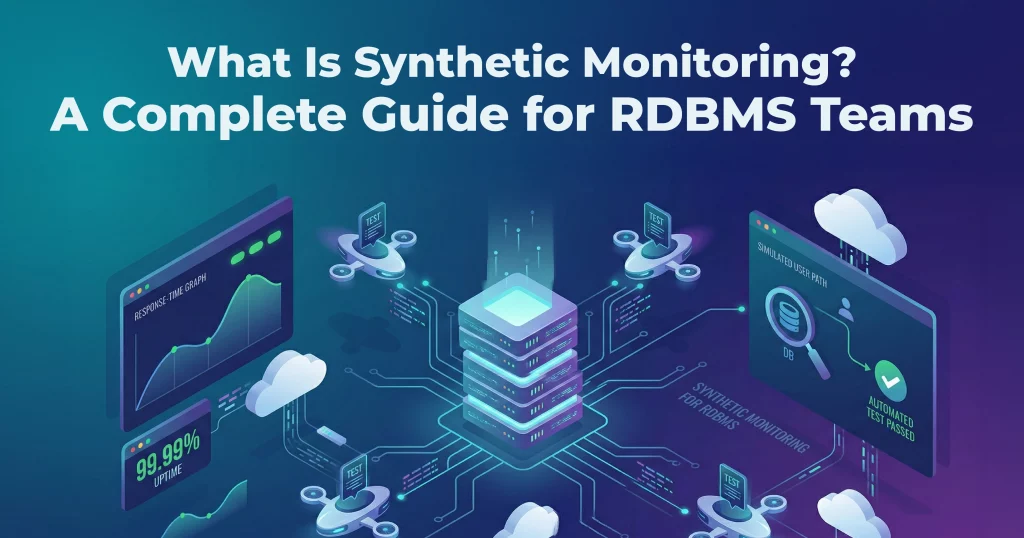
Table of Contents
In today’s digital ecosystem, system failures, slow responses, and downtime can cripple business operations, erode user trust, and violate SLAs. Traditional monitoring often tells you something is broken—after it’s already impacted users. This is where synthetic monitoring comes in—a proactive approach to monitoring that simulates user interactions to detect issues before real users do.
In this guide, we’ll explore synthetic monitoring in depth, focusing on how it can benefit database teams, and introduce Clonetab CT-MON as an enterprise-grade solution designed for modern, complex environments.
What Is Synthetic Monitoring?
Synthetic monitoring, sometimes called proactive or simulated monitoring, empowers you to monitor the health and performance of critical endpoints such as databases and application URLs. With continuous monitoring and intuitive dashboards featuring both visual and audio warnings, you can proactively identify and resolve issues before they disrupt your users.
Key Components:
- Automated End-to-End URL Validation: Simulates real user actions such as login, authentication, and dashboard access to ensure the application is functioning correctly.
- Database Connectivity Checks: Periodically validates database connections to confirm availability and monitor response times.
- Scheduled Execution: Runs tests automatically at fixed intervals — from every few seconds to several hours — based on configuration.
- Performance Tracking: Measures response times, success rates, and overall SLO/SLI compliance to identify bottlenecks early.
- Proactive Alerting: Notifies teams instantly about failures, slowdowns, or threshold breaches before they impact actual users.
Why Synthetic Monitoring Is Essential for Web Applications
APIs are the connective tissue of modern applications. When an API fails or slows down, the ripple effect can disrupt entire workflows.
Benefits:
- Proactive Availability Checks: Continuously validate that key URLs are reachable and responding as expected.
- Login Verification: Simulates user login to ensure authentication pages are functioning correctly.
- Early Issue Detection: Identifies outages or login failures before users encounter them.
- Performance Insights: Tracks URL response times to detect slowdowns or degradation.
- Reliability Monitoring: Helps maintain consistent uptime and smooth access to critical application entry points.
Example Use Case:
For example, in an Oracle E-Business Suite (EBS) environment, after completing a clone or refresh, the application services may be up, but the login page (OACORE) might still be unavailable due to hostname changes, listener issues, or invalid configurations. By monitoring this URL and validating login automatically, teams can immediately know whether the application is ready for use, without waiting for manual checks or user complaints.
Why Monitoring Database Accessibility is Essential
Relational databases are at the core of most enterprise applications, and even small connection issues can interrupt testing, integrations, or scheduled jobs. In non-production environments, databases are frequently restarted, refreshed, or reconfigured—and connectivity problems often go unnoticed until an application fails or a developer reports an error. Automated database connection monitoring ensures that any connectivity, authentication, or listener-related issues are detected immediately.
For example, after refreshing a test or development database, the service may appear “running,” but applications might still fail to connect due to incorrect connection strings, missing network routes, outdated listener settings, or firewall rules. Automated checks that periodically attempt a database login help teams quickly verify that the environment is actually usable and responsive, without relying on manual testing.
How Synthetic Monitoring Helps:
- Automated Connectivity Checks: Regularly verifies that the database accepts connections and responds correctly.
- Post-Maintenance Validation: Confirms database readiness after refreshes, restarts, or configuration changes.
- Immediate Fault Detection: Identifies authentication failures, listener issues, or network-level problems early.
- Response Time Tracking: Measures connection and query response times to detect performance degradation.
- Environment Reliability: Ensures non-prod databases remain stable and ready for development and testing activities.
Clonetab CT-MON supports Oracle, PostgreSQL, MySQL, and other relational databases, offering a unified view of database health across on-prem and cloud environments.
Key Features of an Enterprise Synthetic Monitoring Solution
When evaluating synthetic monitoring tools, look for capabilities that align with operational and compliance needs:
- Synthetic Testing Engine
Supports URL monitoring with automatic availability checks and login authentication validation.
- Custom SLO/SLI Tracking
Define performance targets and visualize compliance in real-time dashboards (green/amber/red status).
- Unified Dashboard
Built with React & Java, offering real-time insights grouped by service or environment.
- Smart Alerting
Configure alerts failures, slowdowns, or threshold breaches via webhook.
- Secure Deployment
Run on-premises or in hybrid clouds—no third-party SaaS required.
Use Cases for Synthetic Monitoring
- Prevent Application Access Issues:
Detect problems with URL availability or login failures before users try to access the application.
- Identify Performance Slowdowns:
Catch increasing response times or delayed login page loads that may indicate backend or network issues.
- Uptime & Reliability Reporting:
Generate periodic reports showing URL availability, response trends, and overall reliability for audits or internal reviews.
- Post-Maintenance Validation:
Verify that critical URLs—such as login pages—are working correctly after refreshes, deployments, or configuration updates.
Why Clonetab CT-MON Stands Out
Clonetab CT-MON gives teams more than basic uptime checks. It combines automated URL availability monitoring, login validation, and relational database availability checks into a unified view—fully deployable within your own environment to ensure complete data privacy and control.
Ideal For:
Application Administrators who need to confirm URL and login page readiness after refreshes, deployments, or maintenance.
Database Teams requiring continuous visibility into database accessibility and connection responsiveness.
DevOps & SRE Teams focused on maintaining environmental reliability, early issue detection, and meeting internal uptime expectations.
Conclusion:
Synthetic monitoring brings a strong “shift-left” mindset to reliability—helping teams catch availability issues early in development, testing, and staging environments, while maintaining continuous assurance in production. For application and database teams, using a tool like Clonetab CT-MON means moving from reactive problem-solving to proactive stability management.
By continuously checking URL availability, validating login readiness, monitoring database accessibility, and tracking performance trends, teams can ensure smooth access to their applications, maintain internal reliability targets, and spend more time on improvement and innovation rather than downtime.